Meditation guides
Silent meditation: how to sit in silence, step by step
Silent meditation means meditating without a guide: no voice telling you what to do and no music, only a timer and your own attention. Sit down, pick one thing to rest your attention on (usually your breath) and come back to it whenever your mind drifts. Five or ten minutes is plenty to start with.

What makes it silent
In a guided meditation, a voice tells you where to put your attention and when. In silent meditation nobody does. You decide what to focus on before you start, and the only sound is whatever is around you: the fridge, the traffic outside, your own breathing. Some people call it unguided meditation.
The technique is the one most beginners learn: rest your attention on one thing and bring it back when it wanders. The difference is that nobody prompts you. Without a voice, it can take a while to notice that your mind has run off, and you have to bring it back yourself. That’s harder at first, but you get quicker at noticing.
One silent sit
- Reston the breath
- Drifta thought pulls you away
- Noticeyou realise you’ve wandered
- Come backto the breath, without fuss
And round again, for the whole sit
How to do it
- Set a timer for five or ten minutes. Pick a soft sound for the end, so the alarm doesn’t make you jump.
- Sit on a chair with both feet on the floor, or on a cushion if you prefer. Rest your hands in your lap. Close your eyes, or let your gaze rest on the floor a little way in front of you.
- Spend the first minute settling in. Notice the chair under you and the sounds in the room.
- Then pick one thing to rest your attention on. The breath is the usual choice: the cool air at your nostrils, or your belly rising and falling. Keep the same anchor for the whole sit.
- When you realise you are thinking about something else, and you will, notice where you went and go back to the breath. There’s no need to tell yourself off.
- When the timer goes, stay where you are for a few breaths before you get up.
When the quiet gets loud
Many people find silence harder than they expected. With no voice to follow, thoughts seem louder, and small sounds become hard to ignore. A few things help:
- Use the sounds. If the neighbour’s drill won’t stop, make it your anchor for a while instead of fighting it.
- Count your breaths: one on the first out-breath, two on the next, up to ten, then start again. If you lose count, go back to one.
- Keep it short. Five minutes today is better than twenty you keep putting off.
- If you keep nodding off, sit up straighter, open your eyes, or try another time of day.
There’s some evidence that silence itself is restful. In a small 2006 study in the journal Heart, Italian researchers played six styles of music to 24 people, half of them musicians, with a two-minute pause slipped in at random. During the pause, heart rate, blood pressure and breathing rate fell, even below where they were before the music started. That was a short lab test with no meditation in it, so don’t read too much into it. Still, two quiet minutes were enough to make a measurable difference.
What to use as a timer
Four ways to find some quiet
Your phone’s timer
Nothing to install. Pick a soft sound and turn on Do Not Disturb.
A meditation timer app
Bells at the start, halfway and at the end, and a log of your sits. The timer in Insight Timer is free.
A silent retreat
Ten days of noble silence at a Vipassana centre, run on donations.
Stille
Ten minutes of sound with no voice, then a gong. One button.
The timer in your phone’s Clock app is enough. Choose a gentle alert sound, and turn on Do Not Disturb so a notification doesn’t cut the sit short.
A meditation timer app can ring a bell halfway and keep a log of your sits. The timer in Insight Timer is free, and the company says it works offline as long as you sign in while you’re still online.
For a much longer stretch of silence, Vipassana centres run ten-day courses where students keep noble silence: no talking, gestures or notes to each other. There’s no charge, even for food and lodging; the courses run on donations from people who have already done one.
Silence, or quiet sound?
Stille, the app I make, isn’t silent. It plays ten minutes of recorded sound with no voice and ends with a soft gong. The sound is stored in the app itself. I made it for the days when total silence feels more like waiting than resting. If you want real silence, a timer is all you need. But if silence keeps making you restless, quiet sound with nothing to follow is a halfway house between guided meditation and silence.
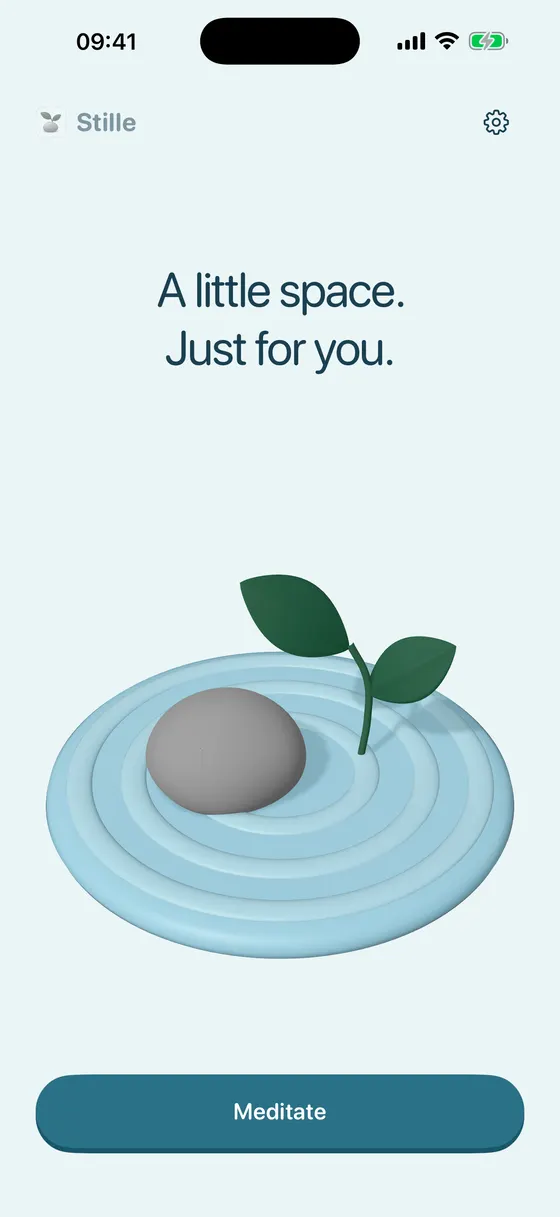 1One tap on Meditate starts ten minutes
 2Time left. No voice, only sound3Pause whenever you need to
- One tap on Meditate starts ten minutes
- Time left. No voice, only sound
- Pause whenever you need to
Stille costs $1.99, once. There’s no account or subscription: you tap Meditate and the ten minutes start.